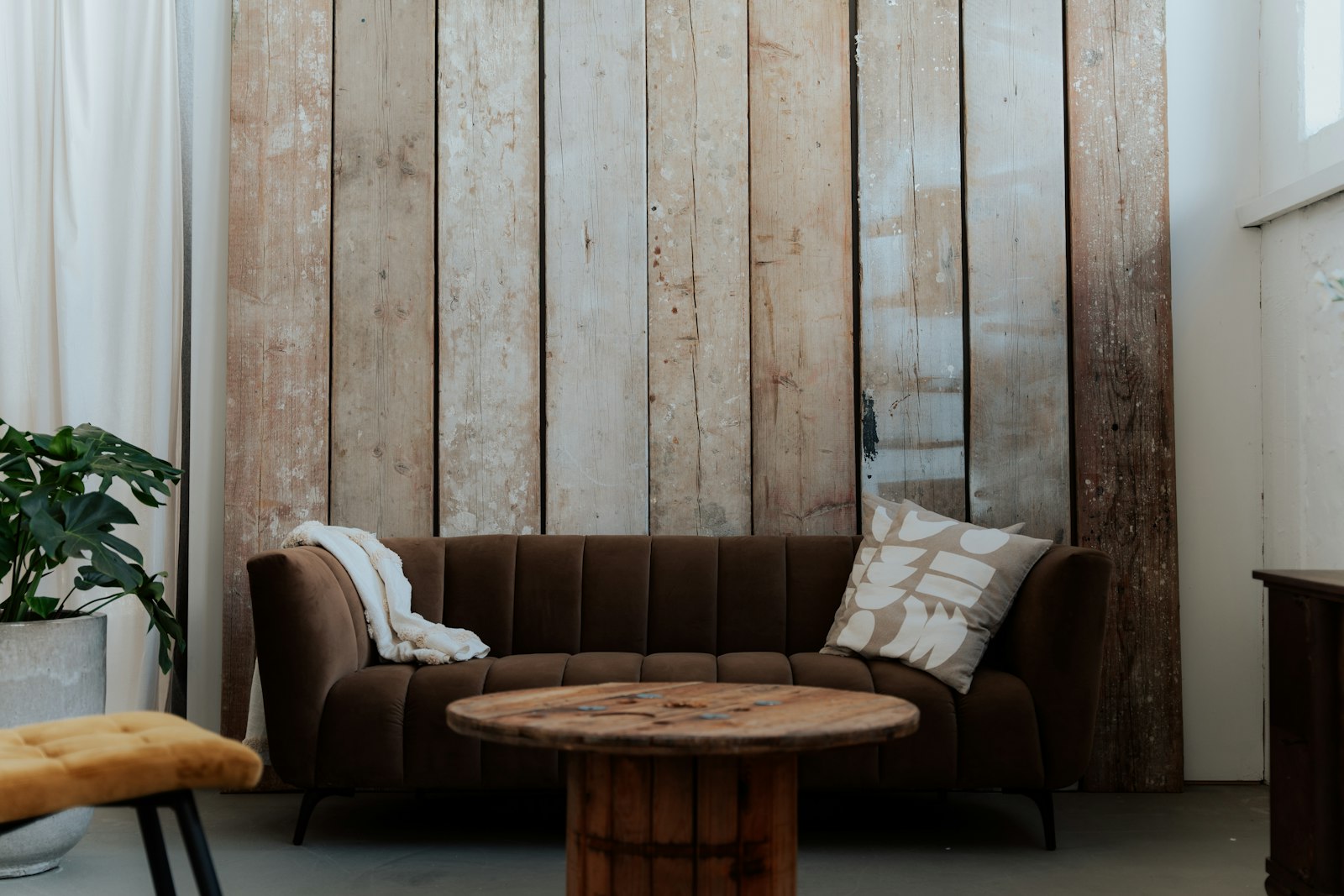
Reclaimed wood brings something new boards cannot: nail holes, saw marks, old paint ghosts and a color that only decades of weather produce. It also brings history you cannot see, from lead paint to insects to the occasional buried nail that will ruin a saw blade. Used well, it is one of the most characterful materials you can put on a wall or a table. Used carelessly, it can be a health problem or a code problem.
This guide covers where reclaimed wood comes from, what to check before it comes indoors, where it works best, how it is usually installed and finished, and the extra questions a shop, cafe or restaurant needs to ask.
Key takeaways
- Know the origin. A reputable supplier can tell you what building or structure the wood came from and how it was processed.
- Treat old paint as lead paint until tested. Sanding or planing painted wood can release hazardous dust.
- Avoid chemically treated wood indoors, such as railroad ties, utility poles and older pressure-treated lumber.
- Kiln-dried is the safer choice for insects and for stability.
- Commercial interiors have fire-rating rules for wall and ceiling finishes; plan for them before you buy.
Where reclaimed wood comes from
Most reclaimed wood sold for interiors comes from a short list of sources:
- Barns and agricultural buildings: siding boards (the gray, weathered look) and heavy timbers. Siding is usually softwood; beams may be oak, pine or other species depending on region.
- Factories, warehouses and mills: large beams, joists and old flooring, often old-growth wood with tight growth rings.
- Houses being deconstructed: flooring, trim, doors and framing.
- Snow fence, wine and whiskey barrels, and other industrial uses: niche sources with distinctive looks.
- Pallets and crates: widely used for DIY projects, but with real caveats (see below).
Buying options range from specialist reclaimed lumber dealers, who sort, mill and kiln-dry the wood, to architectural salvage yards and nonprofit reuse stores, where you buy as found. Dealer stock costs more because of the labor behind it: removing metal, sorting, drying and often milling the boards to consistent thickness.
Safety checks before it comes indoors
Lead paint
In the US, lead-based paint was banned for residential use in 1978, and older paint on barns, houses and trim can still contain lead. Painted reclaimed wood that looks charming on a wall can release lead dust when it is sanded, planed, cut or scraped.
- Assume old painted wood contains lead until it has been tested.
- Consumer test kits exist, but a lab test or an inspection by a certified professional is more reliable.
- If lead is present, the safest choices are to skip that wood, or to use it only where it will never be sanded and to seal it, following local health guidance.
- Contractors working on homes and child-occupied facilities built before 1978 have specific lead-safe work rules in the US. Ask yours how they handle reclaimed painted material.
Chemical treatments
Some old wood was treated with preservatives that do not belong inside a home or restaurant:
- Railroad ties and some marine timbers are commonly treated with creosote. Guidance from US agencies is that creosote-treated wood should not be used indoors.
- Utility poles may be treated with pentachlorophenol or other preservatives.
- Older pressure-treated lumber (much of it treated with chromated copper arsenate before the residential phase-out in the early 2000s) should not be used for interior surfaces, cutting boards or furniture.
Telltale signs include an oily surface, a strong chemical smell, a greenish tint or stamped treatment marks. When in doubt, leave it out.
Pallets
Pallets used in international shipping usually carry an IPPC stamp with a treatment code. HT means heat treated. MB means fumigated with methyl bromide; avoid those for interior projects. Even HT pallets have an unknown history of spills and contents, so many designers use them only for low-contact, sealed applications, or not at all.
Insects and fungus
Old wood can carry powderpost beetles, termites or decay. Look for small round exit holes with fresh, fine powder (frass) below them, soft or crumbly areas and musty smells. Kiln drying at the right temperature and duration kills insects in the wood, so ask whether the stock was kiln-dried and how. Air-dried wood straight from a barn should be inspected carefully and kept away from other wood in your home until you are sure.
Metal
Nails, screws, staples, wire and even bullets turn up in reclaimed boards. Good dealers remove visible metal and scan for hidden pieces before milling. If you are cutting it yourself, run a metal detector over each board first and wear eye protection.
Moisture and movement
Wood shrinks and swells with humidity, and reclaimed wood is no exception. Before installation:
- Ask for the moisture content and check it yourself with a moisture meter.
- Let the wood acclimate in the room where it will be installed, at normal living or operating temperature and humidity, for as long as the installer recommends.
- For flooring and fine joinery, follow the flooring manufacturer’s or installer’s moisture guidance, because wood that is too wet or too dry for the space will gap, cup or crack.
Where it works best
Feature walls. The most common use and the most forgiving. Boards carry little load, are rarely touched and can keep a rough surface.
Ceilings. Planks or beams overhead add warmth to large, hard rooms. Weight and secure fixing matter more here than on walls.
Tables, counters and bar tops. Beautiful, but they need flat, stable, well-dried boards and a durable finish. Gaps and deep checks may need filling so crumbs and liquid do not collect.
Shelving and display. Thick reclaimed boards make strong shelves if they are sound and properly supported.
Flooring. Reclaimed flooring is usually milled into tongue-and-groove boards by a specialist. Old surfaces may be resawn, so the face you see could be freshly cut rather than weathered; ask what you are buying.
Structure. Reusing old beams as structure requires grading by a qualified grader or sign-off by an engineer. Decorative beams that carry no load are a different, simpler job.
Installation basics
For a typical interior wall of reclaimed planks:
- Plan the layout: horizontal, vertical or random lengths. Lay boards out on the floor first to balance color and texture.
- Clean the boards: stiff brush and vacuum. Avoid soaking or pressure washing, which drives water into the wood and raises the grain.
- Fix securely: construction adhesive plus finish nails or brads into studs is common over drywall. Furring strips help on uneven walls.
- Leave small gaps at ceilings, floors and corners to allow for movement, and cover them with trim if needed.
- Keep clearances from heat sources such as stoves and fireplaces according to the appliance instructions and local code.
Expect more waste than with new boards because of splits, short lengths and damaged ends. Ask the supplier how much extra to order for your use.
Finishes
The finish depends on whether people will touch the surface and whether you want to keep the weathered color.
| Finish | Look | Durability | Good for |
|---|---|---|---|
| None (raw) | Most natural | Low; collects dust | Walls and ceilings out of reach |
| Penetrating oil | Darkens and warms | Moderate; easy to refresh | Shelves, low-wear furniture |
| Hardwax oil | Satin, natural feel | Good; spot repairable | Tables, floors |
| Water-based polyurethane (matte) | Clear, little color change | High | Tabletops, bar tops, high-touch walls |
| Oil-based polyurethane | Ambers the color | High | Floors and tops where warming is welcome |
Always test the finish on an offcut. Gray, weathered barn wood can turn noticeably darker under oils, which surprises many people.
Extra questions for shops, cafes and restaurants
Commercial interiors are regulated more tightly than homes:
- Fire rating of wall and ceiling finishes. Building codes classify interior finishes by flame spread using a standard tunnel test, commonly reported as Class A, B or C. Which class is required depends on the type of business, the location (exits and corridors are usually stricter) and whether the building has sprinklers. Untreated solid wood often does not meet the stricter classes, and reclaimed wood rarely comes with test data. Fire-retardant treatments or coatings can help, but they need documentation your code official will accept. Raise this with your designer or contractor before buying.
- Cleanability. Health departments typically require smooth, durable and easily cleanable surfaces in food preparation areas. Rough reclaimed wood belongs in dining rooms, not near prep counters.
- Durability. Chairs, bags and carts will hit walls at certain heights. A chair rail or a sealed, smoother lower section can save the wall.
For the bigger picture of planning a commercial interior, see our guides to restaurant interior design and retail store design for small shops.
Is it sustainable?
Reusing wood keeps a material in use and avoids cutting new timber, which is a real benefit. The picture is less clear when wood is shipped long distances or heavily reprocessed. If sustainability matters to your project, ask the supplier where the wood came from and how it was processed, and look for credible third-party claims rather than marketing language alone.
Common mistakes
- Buying before measuring. Reclaimed stock varies in width and thickness, so measure the wall and confirm what the supplier can deliver in one batch.
- Skipping the lead test on painted boards because they “look old enough.”
- Using treated or unknown wood for tables or anywhere food will touch.
- Ignoring moisture and installing straight from a cold barn into a heated room.
- Leaving fire ratings until inspection day in a commercial project.
Bottom line
Reclaimed wood rewards a little homework. Buy from a supplier who can explain the wood’s origin and processing, test old paint, avoid chemically treated material, let the boards acclimate and choose a finish that matches how the surface will be used. In a shop or restaurant, settle the fire-rating question first. Do that, and the wall or table you end up with will have a story worth telling.
If you are planning a wider project, our renovation design planning guide walks through the order of decisions, and our guide to polished concrete floors covers a common partner material for reclaimed wood in modern interiors.