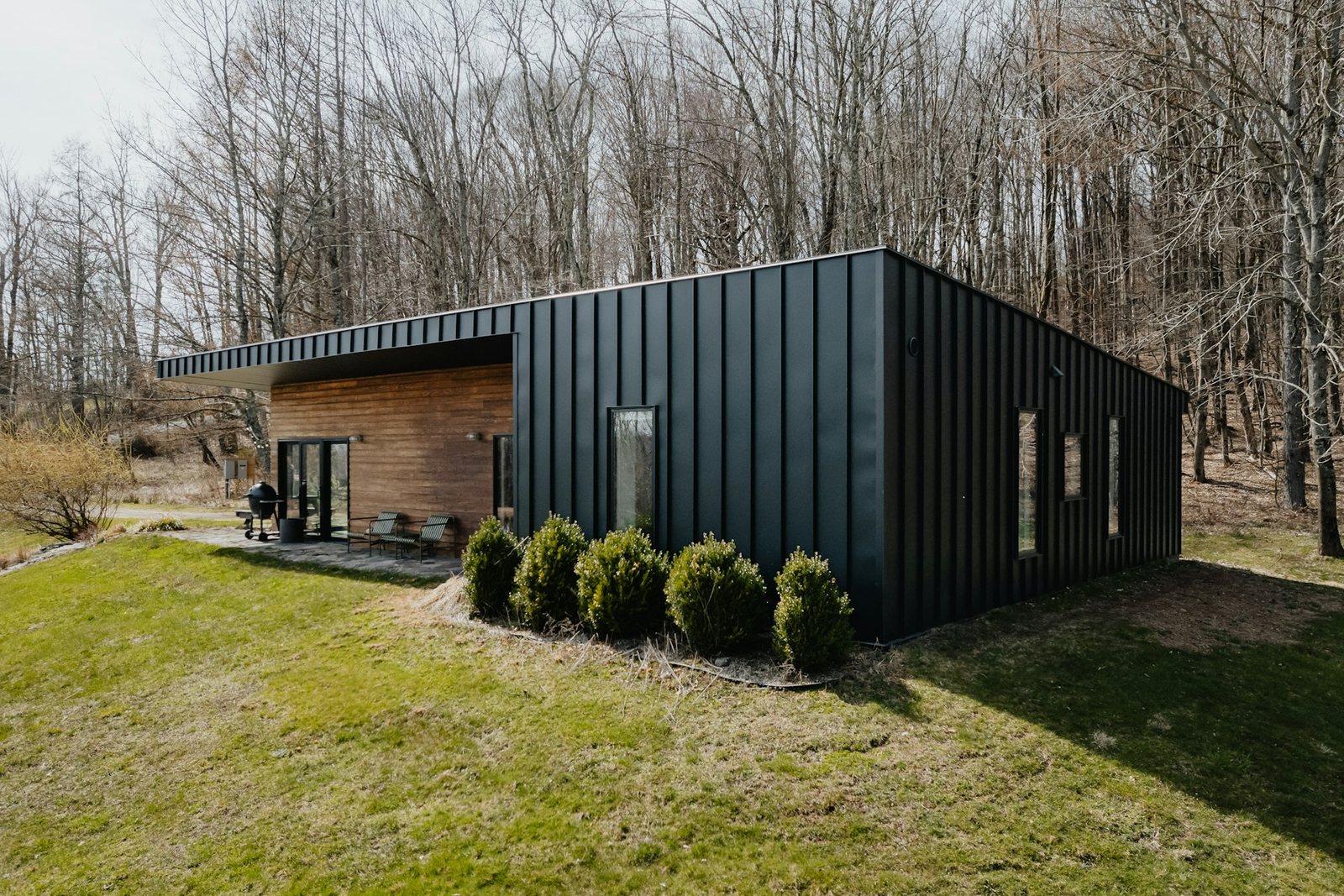
Metal cladding has moved from barns and workshops to modern houses, extensions, studios and garden rooms. It can be crisp and minimal, rugged and agricultural, or rich and changing as it weathers. It is also a system that depends on good detailing: the wrong metal in the wrong place, or poor flashing and ventilation, can cause staining, corrosion and leaks.
This guide compares the main metals and profiles and explains what to discuss with your designer and installer.
Key takeaways
- Metal is durable and low-maintenance when the right metal and coating are matched to the climate.
- Painted steel is the most common and economical; aluminum suits coastal sites; zinc and copper are long-lived premium options that develop a patina.
- Weathering steel looks dramatic but can stain adjacent surfaces as it weathers.
- Expansion, condensation and dissimilar metals are the main technical issues to plan for.
- Installation quality largely determines how well metal cladding performs.
The main metals
Painted (coil-coated) steel
Steel sheet with a metallic coating (such as zinc or zinc-aluminum alloy) and a factory-applied paint system. It comes in many colors and profiles and is widely used for siding and roofing.
- Pros: wide range of colors, economical, strong.
- Cons: cut edges and scratches need care; coating quality varies; coastal exposure demands higher-grade coatings.
Weathering steel
A steel alloy that forms a stable rust-colored surface layer, intended to slow further corrosion.
- Pros: striking, changing appearance; no paint.
- Cons: rust-colored runoff can stain concrete, stone, decks and adjacent surfaces as it weathers; not suitable for every climate, especially where it stays wet or is exposed to salt; details must let water drain and surfaces dry.
Aluminum
Light and naturally corrosion-resistant, usually painted or anodized.
- Pros: good for coastal locations, lighter for installation, doesn’t rust.
- Cons: softer and easier to dent than steel; can cost more than steel.
Zinc
Develops a matte grey patina over time and is used in standing seam and panel systems.
- Pros: long service life, self-healing patina, refined appearance.
- Cons: higher cost; needs ventilation behind it to prevent corrosion on the underside; can react with some materials, such as certain treated or acidic woods, and with runoff from copper.
Copper
Ages from bright to brown and eventually green in many climates.
- Pros: very long life, distinctive patina.
- Cons: expensive; runoff can stain lighter surfaces; can cause corrosion of other metals downstream.
Profiles and systems
| Profile | Look | Typical use |
|---|---|---|
| Standing seam | Long vertical panels with raised seams | Modern facades and roofs, continuous wall-to-roof designs |
| Corrugated | Wavy, agricultural or industrial | Barns, garages, studios, budget-friendly accents |
| Board-and-batten style panels | Vertical ribs at intervals | Contemporary houses, extensions |
| Flat-lock or cassette panels | Flat panels with tight joints | Refined modern facades, rainscreen systems |
| Perforated or expanded metal | Screens with openings | Shading, privacy screens, balustrades |
Pros of metal cladding
- Durability and low maintenance when correctly specified.
- Non-combustible material, though the fire performance of the whole wall assembly, including insulation and membranes, is what codes assess.
- Long lengths and clean lines for contemporary designs.
- Recyclability at end of life.
- Works with other materials such as timber, brick and render.
Cons and challenges
- Dents from hail, ladders and impacts, especially with thinner sheets and softer metals.
- Oil canning: visible waviness in flat panels caused by stresses and expansion. Thicker material, stiffening ribs, narrower panels and careful installation reduce it.
- Thermal expansion: metal expands and contracts with temperature; fixings and joints must allow movement.
- Galvanic corrosion: when dissimilar metals touch in the presence of moisture, one can corrode faster. Use compatible fasteners and flashings, and separate incompatible materials.
- Condensation: warm, moist air reaching the cold back of the metal can condense. A ventilated cavity and proper membranes are important.
- Noise: rain noise is usually more of an issue on roofs than walls, and is reduced with insulation and solid backing.
- Heat: dark metal gets hot in sun; ventilation behind the cladding helps.
Rainscreen and detailing
Most good metal facades work as a rainscreen: the metal sheds most of the water, while a ventilated cavity behind it lets moisture drain and the wall dry. Typical layers include:
- Structural wall with insulation as required by the energy code.
- Water-resistive barrier or membrane.
- Battens or rails creating a ventilated cavity.
- Metal cladding with closures, insect screens and flashings.
Pay particular attention to windows, doors, corners, roof edges and the base of the wall. If you are combining cladding with steel windows, coordinate frame and flashing details; see our steel windows and doors guide.
Climate considerations
- Coastal: salt accelerates corrosion. Aluminum or high-grade coatings are often recommended; check the manufacturer’s coastal guidance and warranty.
- Hail-prone areas: consider heavier gauges or profiles less prone to visible denting.
- Hot, sunny climates: lighter colors stay cooler; plan ventilation.
- Cold climates: detail carefully for condensation and snow load at the base of walls.
Maintenance
- Rinse areas not washed by rain, especially near the coast, as manufacturers recommend.
- Inspect for scratches, cut-edge corrosion and loose fasteners.
- Touch up paint with the manufacturer’s products.
- Keep vegetation and soil away from the base of the cladding.
- Clean gutters to prevent overflow onto walls.
Cost factors
Prices vary widely by region and project. The main factors are:
- The metal and coating.
- Thickness (gauge) and profile.
- Complexity of the building’s shape and openings.
- Rainscreen system and insulation requirements.
- Labor, access and scaffolding.
- Custom colors, finishes and fabrication.
Get detailed quotes that specify materials, gauges, coatings, warranties and what is included in flashing and trim.
Rules and approvals
Check zoning, historic district rules and homeowners’ association covenants before choosing metal for a facade. Building codes govern wall assemblies, insulation and fire performance, and permits are typically required for re-cladding.
Pairing materials
Metal works well with natural textures: timber siding or soffits, brick and stone. Inside, similar industrial character appears in reclaimed wood interiors and polished concrete floors. For planning a larger project, see the renovation design planning guide.
Bottom line
Choose the metal for your climate and the look you want to live with as it ages, specify a ventilated rainscreen with compatible fixings and flashings, allow for expansion, and hire an installer experienced with the system. Done well, metal cladding is one of the most durable and distinctive ways to finish a house.