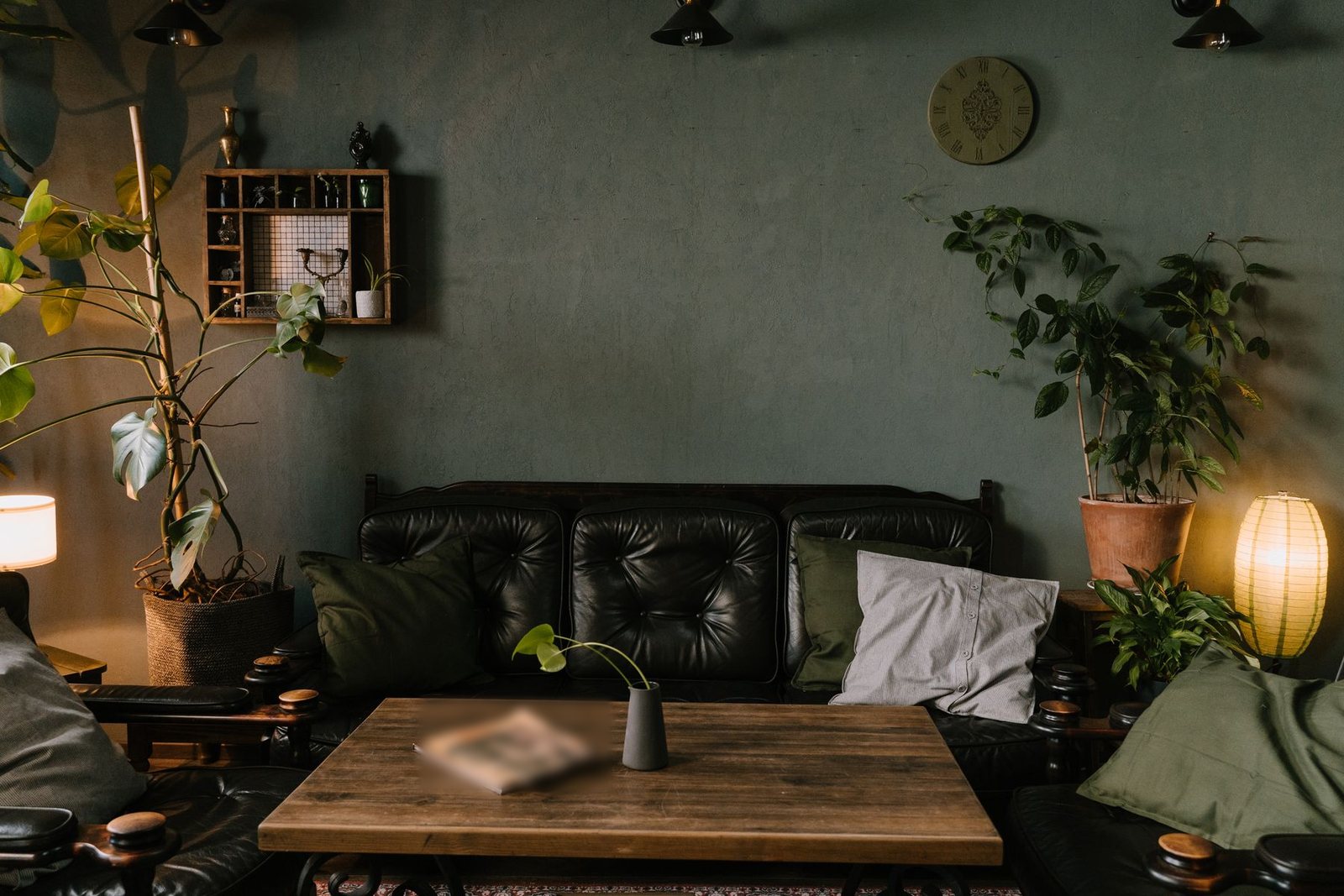
Plants soften hard edges, add color and life, and make rooms feel inhabited. They are also living things, and the most common design mistake is choosing a plant for the spot where it looks good rather than where it can grow. A plant that slowly declines in a dark corner adds nothing to a room.
This guide starts with light, then covers scale, grouping, containers and practical details.
Key takeaways
- Know your light levels before choosing plants.
- Group plants in varied heights rather than spreading single pots around.
- Use fewer, larger plants in small rooms for a calmer look.
- Make care easy: place plants where you will see and water them.
- Check pet safety for every plant.
Read your light
| Light level | Where you find it | Typical plants that tolerate it |
|---|---|---|
| Bright direct | Sunny windows, especially south- and west-facing in the Northern Hemisphere | Cacti, many succulents, some herbs |
| Bright indirect | Near bright windows but out of direct sun, or behind sheer curtains | Many tropical foliage plants, fiddle-leaf figs, rubber plants |
| Medium | A few feet back from a bright window, or near east- or north-facing windows | Pothos, philodendrons, many ferns |
| Low | Far from windows, hallways | A small range of tolerant plants such as snake plants and ZZ plants, which survive but grow slowly |
“Low light” plants tolerate dim conditions; they do not thrive in darkness. Check care guidance for each species, and watch the plant: stretching, pale growth and leaf drop are signs of too little light.
Grow lights
Where daylight is limited, LED grow lights extend options. Choose fixtures designed for plants and place them on a timer. Some look like ordinary lamps or pendants and blend into a room.
Scale and placement
- Floor plants: a tall plant in a corner or beside a sofa adds height and fills empty space. One large plant often looks better than several small ones in a small room.
- Tabletop plants: suit side tables, consoles and dining tables; keep them low on dining tables so people can see each other.
- Shelves and hanging plants: trailing plants soften shelving and use vertical space, but need to be reachable for watering.
- Windowsills: practical for light-loving plants; check that sills do not get too cold in winter or too hot in summer sun.
Grouping
- Group plants of different heights and leaf shapes for a natural look; many designers use groups of three or five as a starting point.
- Repeat a pot color or material to tie a group together.
- Leave space around each plant for air circulation.
Pots and containers
- Drainage: most plants need pots with drainage holes so roots do not sit in water.
- Cachepot method: keep the plant in a plastic nursery pot with holes inside a decorative pot without holes; empty excess water after watering.
- Materials: terracotta breathes and dries faster; glazed ceramic and plastic hold moisture longer.
- Size: repot into a slightly larger pot as plants grow; very large pots stay wet too long.
Protecting floors and furniture
- Use saucers under every pot, and cork or felt pads beneath saucers to stop condensation marks on wood.
- Raise heavy pots on plant stands or trolleys so you can move them and clean underneath.
- Check under large pots regularly for moisture.
Plants in different rooms
- Living room: a large floor plant and a group on a side table or shelf. See small living room layout ideas.
- Kitchen: herbs on a sunny sill; trailing plants on open shelves. See open shelving vs upper cabinets.
- Bathroom: humidity-loving plants if there is a window.
- Bedroom: a few easy-care plants.
- Home office: a plant in view of the desk; see home office design.
- Studios and rentals: freestanding plant stands and hanging planters on existing hooks. See studio apartment layout ideas and renter-friendly decor.
Style
Plants suit almost any style. In Japandi rooms, a single sculptural plant or branch in a ceramic vessel fits the restraint; in Scandinavian rooms, plants are used more freely. See Japandi vs Scandinavian style. For a bigger statement, a planted wall brings greenery across a whole surface; see indoor green walls.
Pet safety
Many popular houseplants are toxic to cats, dogs or other pets if chewed. Before buying, check the plant against a reliable list such as the ASPCA’s toxic and non-toxic plant database, place risky plants out of reach, or choose pet-safe species.
Care basics
- Water according to the plant and season, not on a fixed daily schedule; most plants prefer the top of the soil to dry slightly between waterings.
- Dust leaves so they can use light.
- Rotate plants occasionally for even growth.
- Watch for pests on new plants before placing them with others.
Common mistakes
- Choosing plants for dark corners without grow lights.
- Pots without drainage and no outer pot system.
- Many tiny plants scattered around the room.
- Wet saucers on wooden furniture.
- Ignoring pet safety.
Bottom line
Start with light, then choose plants and sizes that suit each spot, group them with intent, use pots that drain and protect your surfaces. A few healthy, well-placed plants do more for a room than many struggling ones.