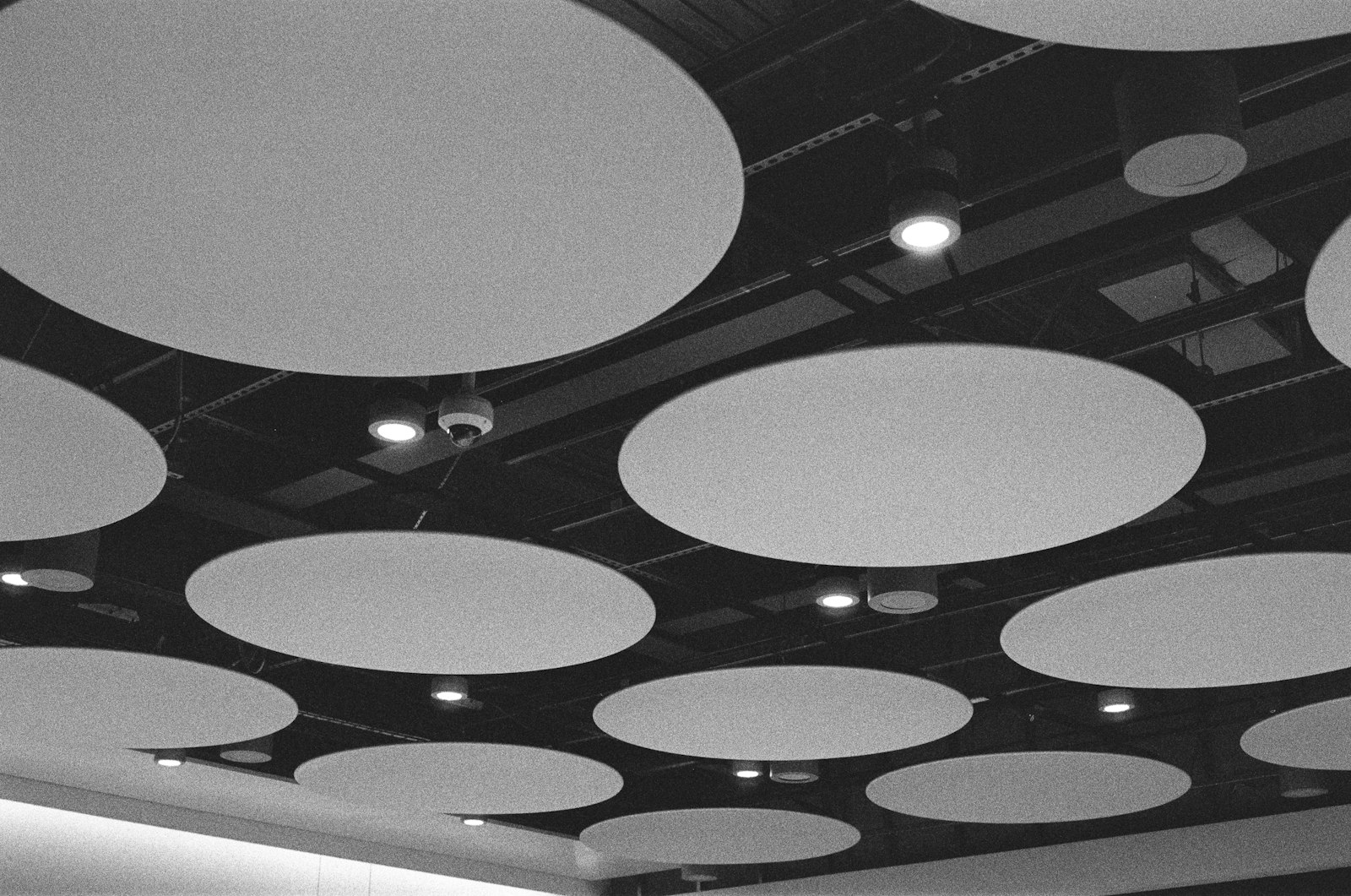
Hard, clean-lined interiors photograph beautifully and often sound terrible. Concrete floors, plaster walls, glass and metal chairs bounce sound around until a half-full restaurant feels like a full one and two people across a table have to lean in. Acoustic felt panels have become a popular fix because they absorb sound and can look like part of the design rather than an afterthought.
They work, within limits. This guide explains what felt panels do, how to compare products, where they are most effective and how to estimate whether you have enough.
Key takeaways
- Absorption is not soundproofing. Panels make a room less echoey; they do little to stop sound reaching the next room.
- Compare NRC ratings measured with the same mounting, and look at the full frequency data if you can.
- The ceiling is usually the most effective place in a dining room or open office because it is the largest uninterrupted surface.
- Thicker panels and an air gap behind them absorb more, especially at lower frequencies.
- In commercial spaces, check fire classification and coordinate ceiling baffles with sprinklers and lights.
Absorption versus isolation
Two different problems are often called “noise”:
- Reverberation inside a room. Sound reflects off hard surfaces and lingers, so speech blurs and the general noise level climbs. Absorptive materials such as felt reduce this.
- Sound transmission between spaces. Music from a bar reaching apartments upstairs, or a meeting room overheard from the corridor. Fixing this needs mass, airtight construction and decoupling in walls, floors and ceilings. Felt panels on the surface make little difference.
If your complaint is the second one, talk to a contractor or acoustic consultant about construction, not panels.
Why loud rooms get louder
In a reflective room, people raise their voices to be heard over the background noise, which raises the background noise, which makes everyone speak louder again. This feedback loop, often linked to the Lombard effect, is why a dining room can go from pleasant to shouting in the space of a few tables. Reducing reverberation breaks the loop early, so the room stays comfortable at higher occupancy.
How to read product ratings
NRC (Noise Reduction Coefficient) is a single number between roughly 0 and 1 that averages a material’s absorption at four mid-range frequencies. A value near 0 means the surface reflects most sound; a value near 1 means it absorbs most of it at those frequencies.
Things to know when comparing:
- Mounting changes the number. The same panel tested flat against a wall will usually score lower than when tested with an air gap behind it. Product sheets state the mounting used; compare like with like.
- Thickness matters. Thin decorative felt absorbs high and mid frequencies reasonably but does much less in the low-mid range where much of the energy of voices and music sits. Thicker panels, layered products and panels spaced off the surface do better.
- Look at the full frequency table if the manufacturer publishes one, not only the NRC.
- Baffles and hanging elements are often rated in absorption per unit (sabins per baffle) rather than NRC, because both faces are exposed.
Materials
PET felt (polyester, often with recycled content) is the most common panel material. It is lightweight, comes in many colors, can be cut into shapes and is generally resistant to moisture and mold.
Wool felt has a softer, richer look and good absorption, usually at a higher price.
Both can be printed, grooved, folded or layered. Whatever the material, ask for the fire test classification if it is going into a commercial space.
Where to put panels
Ceilings first in dining rooms and open offices. The ceiling is typically the largest surface with nothing in front of it. Ceiling clouds (flat panels hung below the ceiling) and baffles (vertical blades) work well, especially under concrete or exposed structure.
Walls at seated head height. Panels between roughly table and head height reduce reflections that carry conversations from one table or desk to the next. Banquette backs are a natural place.
One of each pair of parallel hard walls. Two hard, parallel surfaces can create flutter echo, a rapid ringing between them. Treating one side usually stops it.
Near the source of noise. Around a coffee machine, an open kitchen pass, a checkout or a bar back.
Meeting rooms. Treat walls at ear height and part of the ceiling; glass walls are reflective and may need absorption elsewhere to compensate.
Spread treatment across the room rather than concentrating it in one corner.
A worked example (illustrative)
Acousticians often estimate reverberation time with Sabine’s formula: reverberation time (in seconds) is roughly 0.161 times the room volume in cubic meters, divided by the total absorption in square meters (metric sabins).
Take a dining room 12 m long, 8 m wide and 3.2 m high (about 39 by 26 feet with a 10.5-foot ceiling):
- Volume: 12 × 8 × 3.2 = about 307 m³.
- Suppose the existing surfaces (concrete floor, plaster walls, glass, a few upholstered chairs) add up to about 45 m² of absorption.
- Reverberation time ≈ 0.161 × 307 ÷ 45 ≈ 1.1 seconds.
Now add 50 m² of ceiling panels with an effective absorption coefficient of about 0.8 in the speech range:
- Added absorption ≈ 50 × 0.8 = 40 m².
- New total ≈ 85 m².
- Reverberation time ≈ 0.161 × 307 ÷ 85 ≈ 0.58 seconds.
That is a large, noticeable change. The numbers here are for illustration: real absorption varies by frequency, by mounting and by what is already in the room, including people. Many consultants aim for well under a second in dining rooms meant for conversation, while a lively bar may deliberately keep more energy. Manufacturers often offer calculators, and for larger or problem rooms an acoustic consultant can measure the space and set a proper target.
Practical details
Fire safety. Building codes regulate interior finishes in commercial spaces, and ceiling elements can affect how sprinklers work. Ask for the product’s fire classification and have your contractor coordinate baffles and clouds with sprinkler heads, smoke detectors and lighting before ordering.
Fixing. Panels are glued, screwed, clipped to rails or hung on cables. Adhesive is quick but can damage walls when removed, which matters in rented premises. Mechanical fixings or rail systems are easier to change later.
Cleaning. Felt collects dust. Vacuum gently with a brush attachment and spot clean according to the manufacturer. Keep felt away from cooking areas, where grease will soak in.
Lighting. Overhead baffles and clouds change how light falls in a room; plan them together with your lighting. Our guide to industrial lighting for restaurants and cafes covers the lighting side.
Other absorbers. Upholstered seating, curtains, rugs, books and planting all help. Panels work best as part of a room that is not entirely hard.
Common mistakes
- Buying panels to stop noise reaching neighbors. That is a construction problem.
- Comparing NRC numbers measured with different mountings.
- Treating only one wall in a large room and expecting a transformation.
- Placing panels high on walls in a dining room, where the ceiling would do more.
- Ignoring sprinklers when hanging ceiling elements.
Bottom line
Felt panels are one of the simplest ways to make a hard, modern interior comfortable to talk in. Start with the ceiling, add panels at head height where people sit, compare products using data measured the same way, and in commercial spaces sort out fire ratings and sprinkler coordination first. For the bigger picture of planning a loud-prone room, read our guides to restaurant interior design and polished concrete floors, two of the usual suspects when a room is too lively.